
Early Start Denver Model - ESDM - מודל דנבר
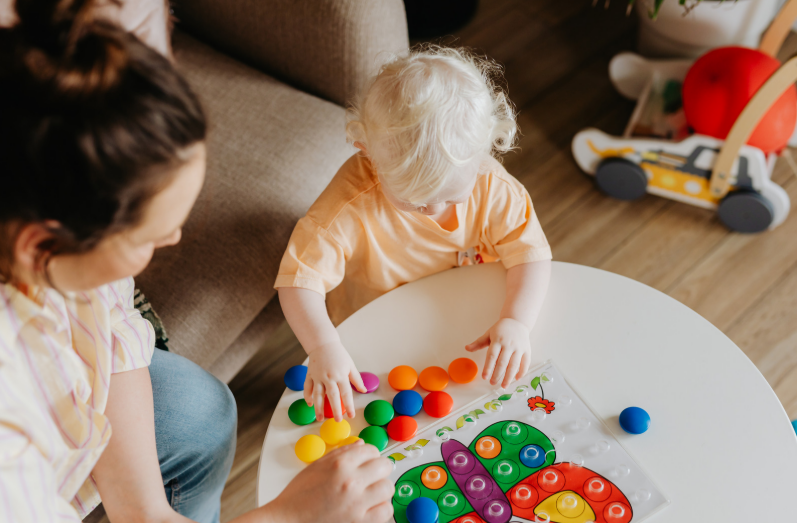
The Early Start Denver Model (ESDM) is a comprehensive early intervention approach, based on play and enjoyment, designed for autistic children in early childhood.
It is one of the world’s leading science-based approaches for supporting autistic children.
The approach is grounded in developmental and behavioral principles within the child’s natural environment, and offers a holistic intervention program that views the child as a whole and focuses on multiple developmental domains.
The central goal of the model is to identify the early challenges children experience during the first stages of development and provide them with targeted support.
The model places special emphasis on building a strong foundation for social learning, based on the understanding that young autistic children may experience challenges in social reciprocity, communication, and language.
Implementation of the Approach
The intervention is implemented through play, with shared enjoyment between the child and the therapist serving as the central engine for learning.
The therapy is based on the child’s initiatives and free choices.
The adult follows the child’s lead, joins them, and uses their areas of interest to promote new skills.
Learning takes place in a variety of playful situations and is smoothly integrated into the child’s daily routine, for example during meals or bath time.
Throughout the activity, the therapist is highly attuned to the child’s emotional and verbal expressions, and makes sure to allow time for rest and regulation when needed.
Areas of Intervention in the Treatment Program
The model addresses the child’s challenges in a broad and comprehensive way, and assesses the child’s abilities across key developmental domains:
Communication and language: receptive communication (language comprehension), expressive communication (language expression), with a special emphasis on pre-linguistic skills and nonverbal communication.
Social learning: joint attention, imitation, play, sharing emotions, and social skills.
Additional skills: cognition, fine motor skills, gross motor skills, behavior, and independence in daily life.
Building an Individual Profile and a Dynamic Program
To ensure that every certified therapist works according to the same high international standards, the model uses a structured skills checklist known as the Curriculum Checklist.
The skills checklist is divided into four levels according to the child’s developmental age.
The work process includes several stages:
Comprehensive assessment: The therapist conducts a developmental assessment through play-based sessions, together with parent reports, in order to gain the broadest possible picture of the child’s developmental profile.
Mapping abilities: Since most children present a mixed profile of abilities, the mapping shows exactly which skills the child has already acquired, which skills are emerging and appear inconsistently, and in which areas the child needs greater support.
Setting focused goals: Based on the individual profile, the therapist and parents jointly determine the therapeutic priorities. Each goal includes a clear criterion for success, and the steps are formulated in an accessible and gradual way.
Periodic reassessment: From time to time, a reassessment is conducted in order to update and refine the program, which is dynamic and accompanied by ongoing monitoring of the child’s progress.
Flexibility and Collaboration
One of the major advantages of the ESDM model is its flexibility.
The approach can be implemented in the clinic, at home, in kindergarten, or in daycare.
Parents are an integral part of the process and receive practical tools to continue applying the principles at home.
For example, parents learn how to turn everyday routines into meaningful learning opportunities.
This is done through shared, child-centered play, focusing on the child’s specific interests, and creating experiences of mutual enjoyment that naturally and intuitively encourage communication and connection.
The sessions themselves are individual, and the therapist has broad knowledge across different developmental domains and collaborates with paramedical professionals according to the child’s needs.
A Research-Based Approach
The ESDM model is supported by a broad body of research indicating its effectiveness in supporting young autistic children.
Studies show that children who received intervention based on this approach demonstrated stronger cognitive and adaptive abilities, alongside significant improvements in language comprehension, social skills, communication, and play.
The model was developed by two leading researchers in the field:
Professor Sally Rogers: Professor of Psychiatry at the MIND Institute at the University of California.
Professor Geraldine Dawson: Professor of Psychiatry and Behavioral Sciences at Duke University School of Medicine, and Director of the Duke Center for Autism and Brain Development.
This approach, alongside the PRT approach, serves as an additional tool in our center’s therapeutic toolbox and is part of our perspective that views each child as a whole. Therefore, we take a comprehensive look at all areas of the child’s development and strive to get to know each child deeply, identify their unique strengths, and use them as a gateway into their world.
References:
Reichow, B., Doehring, P., & Volkmar, F. R. (Eds.). (2025). Handbook of evidence-based practices in autism spectrum disorder. Springer.
🟢 For all updates on autism and events at our center, join our quiet WhatsApp group 🟢


Comments