
התנהגויות מאתגרות בקרב אוטיסטים -Challenging Behaviors in Autism
Updated: Feb 20
Have you ever felt trapped inside a body that does not listen to you, while those around you speak to you as if you are a baby?
For many children with communication and motor difficulties, this is their everyday reality.
When we encounter challenging behaviors at home, in the classroom, and outside:
Shouting, hitting, outbursts, and self-injury, it is easy for us to focus on putting out fires and reacting to violence.
But what if we change our perspective and become detectives?
Much of what is shared in this post is drawn from the experiences of non-speaking autistic individuals who were able to express their feelings through typing or writing.

The Iceberg Model: What lies beneath the surface?
Violent behavior is only the tip of the iceberg, above the water we see the act, but beneath it lies an entire world of frustration:
Helplessness and lack of control: A child who feels they have no influence over their reality (when they eat, what they learn, who touches them, when something ends) accumulates frustration that can turn into violence as an attempt to regain control.
Absence of language: Imagine you are thirsty or in pain and have no way to say it. Without tools for augmentative and alternative communication (AAC), the frustration can turn into a physical outburst.
Sensory overload: Sometimes the lights are too bright, the scraping of chairs is too loud, or the texture of the food is aversive.
Emotional load from home or the educational setting: It is important to recognize that not everything is within our control. A child arrives carrying an emotional state from home or from the educational setting or transportation (a sleepless night, family tension, absence of regular staff).
The proposed starting point as a key to change in addressing challenging behaviors in autism: the presumption of competence
It is worth considering a shift in our starting point.
The presumption of competence suggests assuming that the person understands everything.
Even if their body betrays them, they perceive our words, the meaning, our tone, and our attitude.
When we relate to children according to their chronological age rather than their apparent level of functioning, their level of stress may decrease.
Instead of coloring pages for a 17 year old teenager, we can offer materials that respect their intelligence, such as National Geographic magazines or contemporary music.
Imagine being trapped inside a body that does not respond to you, while the people around you speak to you as if you are a baby, this is a tremendous source of frustration, anger, and violence.
How do we move toward preventing challenging behaviors? Practical tools
To create a safe and respectful environment, it is worth adopting several tools:
Medical checkups:
Ensure routine screening for possible sources of pain and discomfort: dental checkups, screening for nutritional deficiencies, monitoring constipation, monitoring dry mouth which may be caused by medication, itchy bites and allergies, possible anxiety or fears.
Careful observation:
Try to identify and isolate the antecedent to the challenging behavior and the response to it. Also try to identify the antecedent to positive behavior in order to discover patterns and regularities. Based on what is revealed, consider changing something in the equation.
Building routine and preparation:
A visual schedule. Words are spoken and disappear, visual support creates security and stability and may therefore reduce anxiety. This way the child knows what to expect, even when the routine is similar. Visual support addresses the need to know when something ends. A visual structure within an activity is also recommended for some children.
Preparation. Prepare for any change and prevent surprises. Tell the child what is about to happen: "soon we are finishing ___ and moving to ___".
Use of social stories. link to post on social stories according to clear guidelines. A story with photos of the child, the people around them, and their environment allows clarity in ambiguous situations, situations of change, new situations, or situations in which a specific behavior is required.
Use of augmentative and alternative communication. link to post on AAC Offer accessible symbols, an alphabet board, offer typing, single message voice output. Gesture, adapt the communication method to the child. Search and keep searching until something fits.
A sensory and physically regulating environment: it is recommended to relate to all senses, for example:
Hearing, is it too noisy? Is someone shouting? The sound of chairs scraping?
Vision, are the lights too bright? Is fluorescent lighting flickering?
Touch, is the texture of the food aversive? Is there a demand to touch unpleasant materials? Perhaps after a certain food there is always an outburst? Perhaps every time there is no schnitzel there is an outburst?
What can be done?
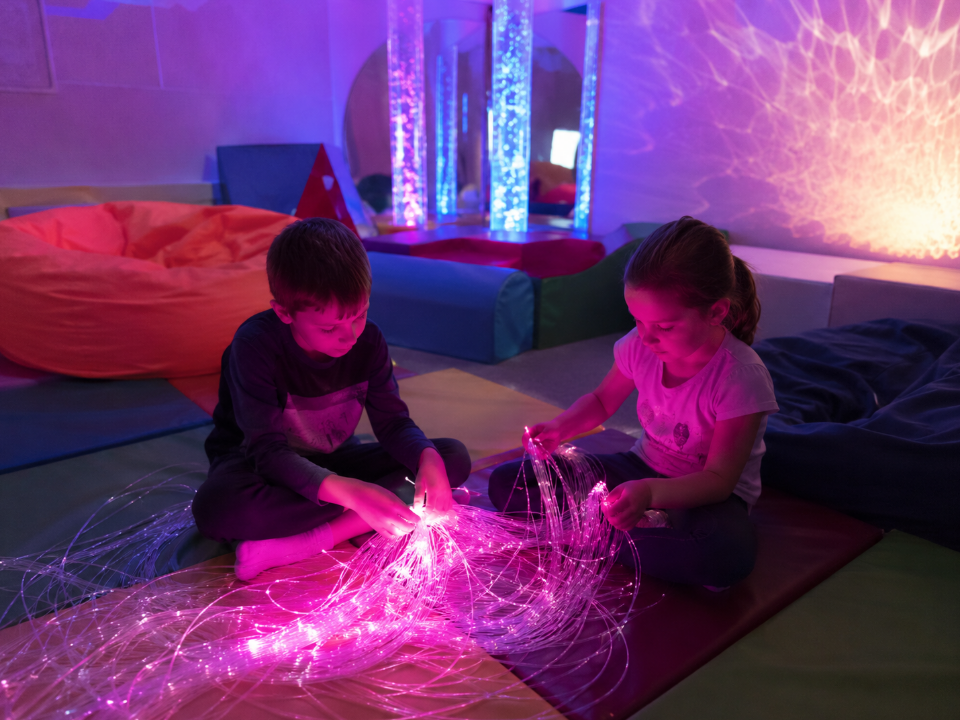
Create a quiet space with a beanbag or curtain that the child can access before losing control.
Planned breaks for walks, jumping, time in the yard, retreating to a small space, deep pressure or wrapping.
Use of supports such as headphones, sunglasses, chew tools.
Focusing on the positive: Provide reinforcement that encourages positive behavior, preferably not edible reinforcers and not exaggerated rewards. Positive attention, if the child loves newspapers, give them a new newspaper. Reinforcement that is age appropriate and respectful of their interests.
Reflection questionnaire presumption of competence test
The next time you find yourself facing challenging behaviors, ask yourself:
➤ Tone and language test: When I spoke to the child during the incident or before it, did I use the tone and language I would use with a teenager their age without a disability, or did I speak to them as if they were a baby?
➤ The "why" test: Did I interpret the violence as bad behavior or as deliberate defiance, or did I try to understand what the child is trying to tell me but does not have the language ability to express?
➤ Educational content test: Was the task the child refused to do that led to the outburst truly respectful of their intelligence, or was it too boring or too childish for them?
➤ Space and touch test: Did I respect their personal space, or did I enter their bubble touch, hug, move their chair without asking permission or preparing them for what was about to happen?
➤ Voice test: Did I provide an alternative way alphabet board, symbols, typing, objects for them to express their resistance before it became physical? For example offering a choice of food before serving it on the plate.
The questionnaire is not a magic solution and there will still be many questions and frustrations, but it offers a shift in perspective.
Remember: your children may not be able to speak, but they are listening to every word.
They have a rich inner world that is just waiting for us to find the key to it.
Do not give up on them, they are there inside.
🟢 For all updates on autism and events at our center, join our quiet WhatsApp group 🟢


Comments