
Repetitive and Restricted Behaviors in Autism - דפוסי התנהגות חזרתיים ומוגבלים בקרב אוטיסטים

Repetitive and Restricted Behaviors (RRBs) are patterns of behavior characterized by repetitiveness, inflexibility, rigidity, lack of contextual appropriateness, and often by the absence of a clear function or specific goal.
These behaviors are part of the core characteristics and diagnostic criteria of autism. Testimonies from autistic individuals indicate that stereotyped behaviors help reduce anxiety, provide grounding, support emotional and sensory regulation, increase a sense of safety, or express excitement.
Autistic individuals also describe these movements as comparable to scratching an itch or the urge to sneeze: attempting to forbid someone from engaging in them is similar to forbidding a person to scratch when they feel itchy, or telling them they are not allowed to sneeze.
Consequently, interventions aimed at reducing these behaviors are not necessarily recommended, except in cases where they cause significant disruption to public order (such as public masturbation) or pose a substantial risk of self-injury (such as severe head banging).
In addition, there are contexts in which vigorous hand-flapping or vocalizations may be inappropriate because they are socially unconventional and disturb others, for example, in a classroom setting or while waiting in line.
When referring to stereotyped movements, the term describes repetitive movements, but it also encompasses additional characteristics beyond repetition alone:
Repetitiveness - the same movement is repeated over and over (e.g., hand-flapping, finger-twirling, repetitive jumping).
Fixed and predictable pattern - the movement is performed in the same manner, rhythm, and sequence.
Inflexibility - the movement is difficult to modify or stop.
Sometimes lacking a clear functional purpose - it does not serve an immediate, obvious practical goal.
Sometimes associated with self-regulation or sensory experience, though not always.
⚠️ Important to distinguish:
Not all repetition is stereotypy.
For example, repetition for the purposes of learning, play, or practice is not necessarily stereotyped.
Repetitive movements may also be ritualistic, sensory, or functional, and therefore are not always classified as stereotyped behaviors.
.
To date, the classification of repetitive and restricted behaviors remains a matter of debate.
The Diagnostic and Statistical Manual of Mental Disorders (DSM-5) describes four patterns of repetitive and restricted behaviors, including:
Repetitive movements, repetitive use of objects or speech, or stereotyped behaviors.
Rigidity, including insistence on sameness and ritualized or inflexible adherence to routines.
Restricted behaviors, including restricted interests and highly fixated interests.
Atypical sensory responses, including hypo-reactivity and hyper-reactivity to sensory input, as well as sensory-seeking behaviors.
Repetitive and restricted behaviors are commonly divided into two factors:
Lower-order behaviors, characterized by repetitive actions, including stereotyped motor movements, repetitive manipulation of objects, and repetitive forms of self-injurious behavior.
Higher-order behaviors, which include attachment to objects, insistence on routines, repetitive use of language, and restricted interests.
Whereas lower-order repetitive behaviors are characterized by motor rigidity, higher-order repetitive behaviors are considered more complex and involve cognitive rigidity.
Why does this occur? Possible mechanisms – brain, genetics, and the immune system
The literature describes evidence of disruptions in neural connectivity (for example, in cortico-striatal pathways and basal ganglia circuits) as a possible basis for these behaviors.
In addition, findings indicate a strong genetic contribution, alterations in the excitation–inhibition balance, the involvement of neurotransmitters (dopamine, glutamate, GABA, serotonin), and a possible role of neuroinflammation and the immune system.
Executive functions have been found to predict repetitive and restricted behaviors in autism and provide an explanation for difficulties such as the need for routines, adherence to repetitive behaviors, difficulties with transitions, and difficulty shifting attention between different stimuli. The executive functions most strongly associated with these behaviors are cognitive flexibility and response inhibition.
In summary, the underlying causes are likely multisystemic, arising from interactions among neural networks, cognitive factors, sensory sensitivity, genetic influences, and immune system functioning.
Treatment of Repetitive and Restricted Behaviors in Autism
1. Behavioral Interventions
Behavioral interventions and targeted protocols aimed at reducing stereotyped behaviors are often presented as a first-line approach, with evidence suggesting greater effectiveness when implemented at an early age.
However, it is important to note that interventions designed specifically to reduce these behaviors are controversial and not always recommended. As noted earlier, testimonies from autistic adults indicate that these behaviors often help reduce anxiety and support sensory and emotional regulation; therefore, suppressing them may be counterproductive or even harmful.
Practical strategies that may help include:
Replacing one movement with another that is less conspicuous and more appropriate for a specific setting or time.
Assessing whether environmental factors are contributing to distress and addressing the underlying cause (e.g., an overly crowded classroom, psychological stress, or fatigue).
Allowing the autistic individual to move to a different space in order to self-regulate.
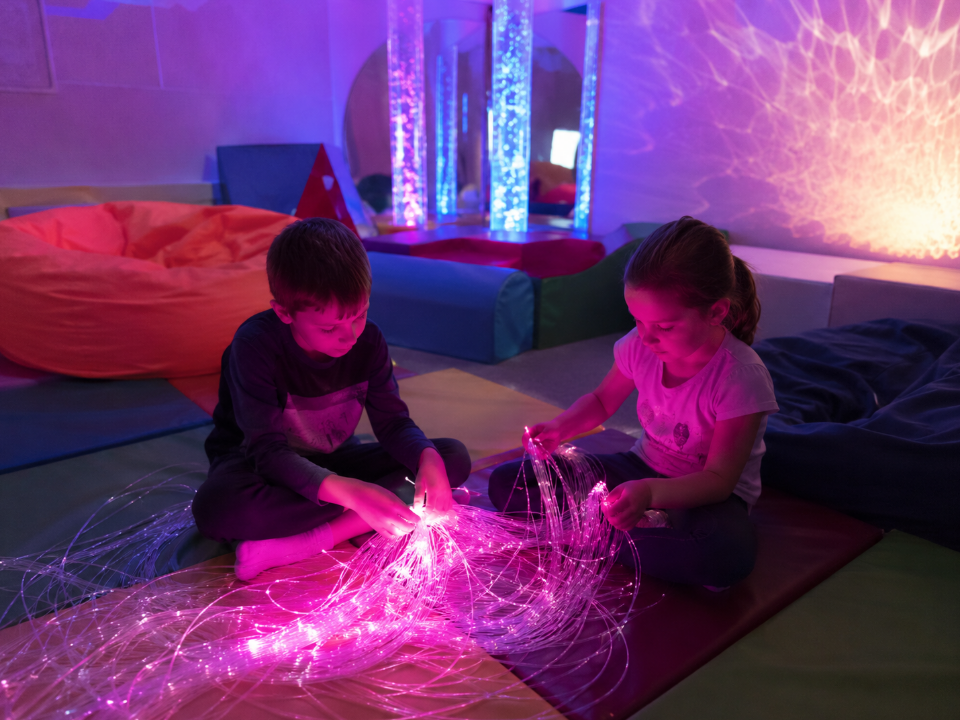
Allowing the use of sensory tools that can meet the nervous system’s need for movement.
Considering additional creative, individualized solutions tailored to the person’s specific needs.
In addition, as noted earlier, it is always recommended to evaluate each case individually.
For example, in cases of severe self-injurious repetitive behaviors (such as repeated biting, self-hair pulling, or repeated striking of the face) or in behaviors that are morally or legally inappropriate, such as public masturbation, approaching strangers in an intrusive manner, or staring at others, behavioral interventions aimed at reducing or stopping these behaviors should certainly be considered.
2. Pharmacological Treatment and Additional Approaches
In parallel, the scientific literature also describes pharmacological options and complementary approaches.
These include the use of antipsychotic medications to reduce irritability, as well as trials of medications that affect glutamatergic and GABAergic systems, for example, N-acetylcysteine, with preliminary findings that are promising but inconsistent.
In addition, early exploratory directions such as cell-based therapies (e.g., mesenchymal stem cells) are being investigated, with researchers emphasizing that the evidence is still preliminary and that large, well-controlled trials are required.
Further elaboration on commonly used pharmacological treatment in Israel:
(This does not constitute medical advice, and consultation with a physician is required before making any decision regarding medication use.)
A very comprehensive meta-analysis examining treatments for repetitive and restricted behaviors in autism assessed the effects and efficacy of pharmacological interventions.
The main conclusion is that existing medications have, at best, a limited benefit for treating repetitive and restricted behaviors, and that there is currently no well-established, highly effective pharmacological treatment for this domain.
Antipsychotic medications (primarily risperidone and aripiprazole) have demonstrated a statistically significant but small improvement in repetitive and restricted behaviors in autism compared to placebo, indicating a modest clinical effect.
In Israel, risperidone is marketed primarily under the following names (which may vary by health fund and manufacturer):
Risperdal – the most well-known and commonly used brand
Rispone
Risperidex / Risperidone Teva / Risperidone-Taro
Aripiprazole is marketed in Israel under the following names:
Abilify – the most well-known brand
Ariply / Aripiprazole Teva / Aripiprazole-Taro
These medications are prescribed mainly to address irritability, aggression, and emotional dysregulation in autistic children and adolescents.
Several other individual medications (such as fluvoxamine, buspirone, bumetanide, divalproex, guanfacine, and folinic acid) have shown positive results in single studies, but without replication in additional trials; therefore, conclusions regarding their effectiveness remain cautious.
Medication classes that have been extensively studied, such as oxytocin, omega-3 fatty acids, SSRIs, and methylphenidate, have not demonstrated a significant advantage over placebo in reducing repetitive and restricted behaviors in autism.
3. Physical Activity
Previous comprehensive studies have found that 15 minutes of moderate-to-high intensity physical activity significantly reduced stereotyped behaviors in autistic individuals. Across these interventions, the emphasis was on increasing heart rate through activities such as trampoline jumping, walking, running, ball games, and stationary cycling.
A recent meta-analysis (2026) found that physical activity helps reduce repetitive and restricted behaviors in autism. Activities shown to be beneficial included ball games, karate training, and cycling, with ball games found to be the most effective for children aged 5–8 years when implemented for more than 9 weeks.
In summary, repetitive and restricted behaviors in autism have been studied less extensively than the social-communication domain, and consequently there is relatively limited available evidence.
At present, both their classification and treatment remain controversial and not highly effective, and there is also debate regarding whether these behaviors should be reduced or eliminated at all.
A balanced approach is therefore most appropriate: each case should be evaluated individually, considering whether these behaviors support the child’s emotional and social functioning or, alternatively, pose risks and compromise the child’s safety.
References:
Chaxiong, P., Dimian, A. F., & Wolff, J. J. (2022). Restricted and repetitive behavior in children with autism during the first three years of life: A systematic review. Frontiers in Psychology, 13, 986876. https://doi.org/10.3389/fpsyg.2022.986876
Tian, J., Gao, X., & Yang, L. (2022). Repetitive restricted behaviors in autism spectrum disorder: From mechanism to development of therapeutics. Frontiers in Neuroscience, 16, 780407. doi: 10.3389/fnins.2022.780407
Wang, K., Qiu, F., Liu, J., & Yang, X. (2026). The effects of exercise intervention for restricted and repetitive behavior in children with autism spectrum disorder: A network meta- analysis. Journal of Behavioral and Cognitive Therapy, 36(1), 100549.
Zhou, M. S., Nasir, M., Farhat, L. C., Kook, M., Artukoglu, B. B., & Bloch, M. H. (2021). Meta-analysis: pharmacologic treatment of restricted and repetitive behaviors in autism spectrum disorders. Journal of the American Academy of Child & Adolescent Psychiatry, 60(1), 35-45. https://doi.org/10.1016/j.jaac.2020.03.007
🟢 For all updates on autism and events at our center, join our quiet WhatsApp group 🟢


Comments