
Autism and Auditory Processing: Noise Sensitivity, Sensory Regulation, and Auditory Processing Difficulties - עיבוד חושי שמיעתי בקרב אוטיסטים

Does your child cover their ears when the vacuum cleaner is running?
Do they struggle to concentrate in the classroom when there is a lot of background noise?
Perhaps they get startled by certain sounds, find it difficult when several people speak at once, or actively seek out sounds by humming, tapping, singing, or speaking loudly?
Do they sometimes get frightened by a noise that no one else hears?
Such behaviors may be related to how a child perceives, processes, and responds to auditory information.
The link between autism and auditory processing is receiving significant attention in research, as some autistic children experience differences in how sensory information, including auditory input is felt and processed.
However, it is important to remember that every child is different.
Not every autistic child has auditory sensitivity or auditory processing difficulties, and even when a challenge exists, it can look different from one child to another.
What Is Auditory Processing?
Hearing is much more than simply receiving sound.
When we hear a teacher’s voice in the classroom, the ears pick up sound waves and transmit information to the nervous system.
The brain must then process this information, identify sounds and words, comprehend their meaning, and focus on the relevant input.
Additionally, we need to manage many sounds happening around us simultaneously.
For example, in a classroom, a child might hear:
Children talking
Chairs moving
Pencils tapping
Pages turning
Air conditioner noise
Sounds from the hallway
The teacher’s voice
The ability to focus on the essential voice while filtering out background noise involves a combination of hearing, auditory processing, and attention.
Consequently, a child can have perfectly normal hearing yet still struggle to understand speech in a noisy environment.
The cochlea is the hearing organ located in the inner ear.
It converts sound vibrations into neural signals transmitted via the auditory nerve to the brain. In the brain, auditory processing occurs, enabling us to recognize and understand sounds, speech, and vocal information.
What Is the Connection Between Autism and Auditory Processing?
Some autistic children and adults experience differences in processing and responding to auditory information.
These differences may manifest as:
High sensitivity to specific sounds
Strong reactions to sudden noises
Difficulty functioning in noisy environments
Trouble filtering out background noise
Difficulty understanding speech when multiple voices are heard simultaneously
Seeking out sounds or repeatedly generating noises
It is crucial to emphasize that there is no single auditory profile that fits all autistic individuals.
One child might be highly sensitive to noise, while another may seem hardly to notice it at all. A third child might actively seek out auditory input.
Auditory Sensitivity and Noise Sensitivity in Children
Auditory sensitivity describes a state where specific sounds or auditory environments are experienced as intense, unpleasant, or overwhelming.
A child with noise sensitivity might:
Cover their ears
Get startled by sudden noises
Avoid noisy places
Struggle at parties, events, or crowded settings
React strongly to specific sounds
Ask to leave a noisy room
Look for a quiet space to calm down
To a parent, the reaction might seem exaggerated. For the child, however, the sound can truly be painful or overwhelming.
Auditory Seeking: When a Child Actively Looks for Noise
Responding to auditory input does not always mean avoidance.
Some children proactively seek out sounds and noise. They may:
Hum or sing
Speak loudly
Tap on objects
Make noises during play
Enjoy repetitive sounds
Seek out music or various sound sources
Auditory-seeking behavior can stem from various reasons; therefore, it is important to observe when it occurs, what the child gains from it, and how it impacts their daily functioning.
How Auditory Processing Difficulties Can Impact Daily Life
An auditory processing difficulty is not strictly about how one reacts to noise.
It can also manifest in everyday situations such as:
At home: Difficulty listening while the TV is on, needing instructions repeated, or struggling to follow multi-step directions.
At preschool and school: Difficulty understanding the teacher while other children are talking, being easily distracted by environmental sounds, or having trouble following spoken instructions.
Socially: Difficulty maintaining a conversation in a noisy environment when multiple people speak at once.
In new situations: A stronger reaction to unexpected noises or unfamiliar environments.
What Can Be Done to Help?
The goal is not to force the child to get used to noise at all costs.
The objective is to understand what creates difficulty and what enables better participation.
When Noises Become Overwhelming
Reducing background noise: When the child needs to focus or receive an important instruction, eliminate unnecessary sounds.
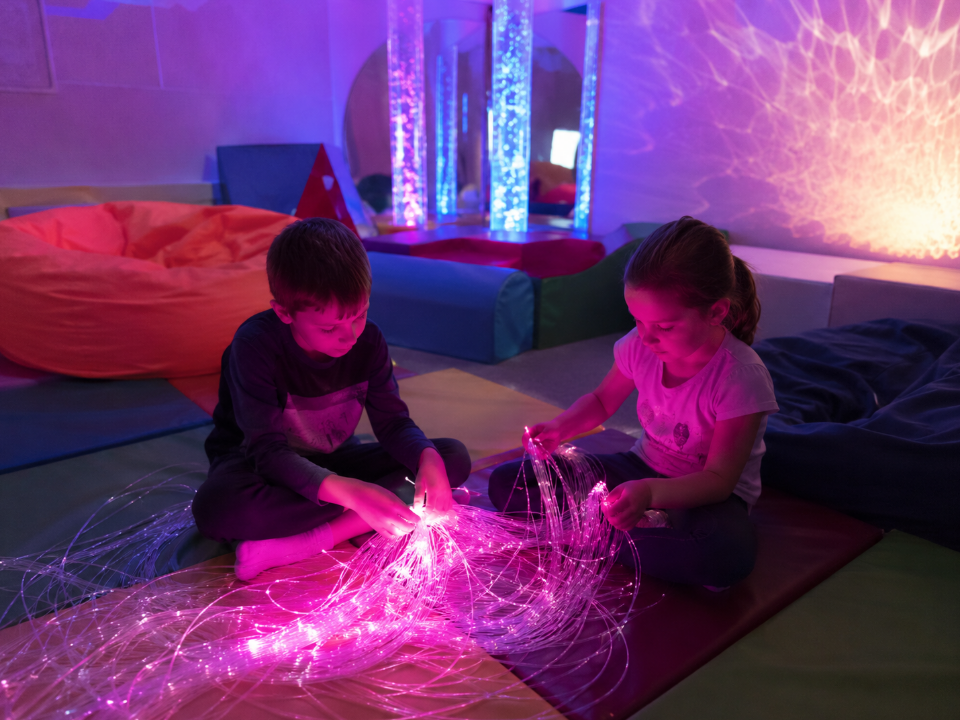
Creating a quiet space: A calm corner at home or in an educational setting allows the child to take a break when the environment gets overloaded.
A quiet or low stimulation room should be available at all times not just when a child is overwhelmed allowing them to access it whenever needed.
Advance preparation: If a loud noise or a transition to a noisy environment is expected, prepare the child beforehand and explain what is going to happen.
Noise-reducing headphones: In certain situations, headphones can help reduce auditory overload.
However, they should be used thoughtfully rather than becoming an automatic fix for every environment.
When a Child Seeks Auditory Input
Incorporate playful auditory activities, such as:
Songs and rhymes
Rhythm games
Sound sequence imitation
Sound identification and discrimination games
Combining movement, music, and vocalization
Activities should be tailored to the child and their specific goals, rather than simply adding more noise.
If a child generates noise, consider providing a designated space where doing so is acceptable and does not disrupt others.
Auditory processing difficulties or noise sensitivity alone do not indicate autism.
Similar behaviors can occur in children for many different reasons.
Even among autistic children, there is no uniform auditory pattern.
Therefore, it is essential to view the child holistically rather than drawing conclusions based on a single trait.
What About Normal Hearing?
This is another crucial point.
A child can pass a standard hearing test with flying colors and still struggle in situations requiring complex auditory processing, such as filtering background noise or following lengthy verbal information.
Therefore, when persistent challenges arise in understanding speech, listening, or functioning in noisy environments, it is worth investigating further rather than asking only, Can they hear?
When Should You Consult a Professional?
If you consistently observe in your child:
Significant sensitivity to noise
Difficulty functioning in noisy environments
Trouble understanding speech amidst background noise
Difficulty following verbal instructions
Unusual or strong reactions to sounds
Consistent sound-seeking behavior
Or a noticeable change in functioning due to a crowded auditory environment
An evaluation can begin with a standard hearing test and, as needed, proceed to a sensory processing and auditory regulation assessment.
In Summary
For most of us, the brain filters out much of this auditory information almost automatically.
For some children, particularly certain children with autistic traits, managing auditory information can be far more complex.
When a child covers their ears, struggles to listen in class, avoids noisy places, or actively seeks out sounds, it pays to pause and ask:
Not just Why are they acting this way? but What are they experiencing, and what can help them?
Understanding auditory processing, noise sensitivity, sensory regulation, and their connections to autism allows us to adapt the environment to the child's needs, reduce overload, and support their full participation at home, in preschool, and at school.
Previous Posts on Sensory Regulation:
Refferences:
Bamiou, D. E., Di Bonaventura, S., & Skuse, D. (2026). Navigating auditory assessment in autistic individuals: a narrative review. Archives of Disease in Childhood, 111(3), 229–234. DOI: 10.1136/archdischild-2025-328623
Poulsen, R., Williams, Z., Dwyer, P., Pellicano, E., Sowman, P. F., & McAlpine, D. (2024). How auditory processing influences the autistic profile: A review. Autism Research, 17(12), 2452–2470. doi: 10.1002/aur.3259
Goncalves, A. M., & Monteiro, P. (2023). Autism Spectrum Disorder and auditory sensory alterations: a systematic review on the integrity of cognitive and neuronal functions related to auditory processing. Journal of Neural Transmission, 130(3), 325–408. DOI: 10.1007/s00702-023-02595-9
🟢 For all updates on autism and events at our center, join our quiet WhatsApp group 🟢


Comments